In the world of premium chocolate, the name Sambirano is synonymous with excellence. The Sambirano Valley in north-western Madagascar produces one of the most sought-after cocoas by exceptional chocolatiers around the world. Classified as Fine or Flavour Cocoa by the International Cocoa Organisation (ICCO) — a distinction reserved for less than 8% of world production — Malagasy cocoa has established itself as an essential reference in the bean-to-bar movement.
This comprehensive guide explores the origin of this exceptional cocoa, its unique aromatic profile, the transformation process that reveals its complexity, the certifications that guarantee its ethical credentials, and how professionals can source directly from EKL Export, a certified exporter based in Madagascar.
1.1 Geography and Natural Conditions
The Sambirano Valley is located in the Diana region, in north-western Madagascar, near the town of Ambanja. It is one of the rare areas of Madagascar to receive rainfall throughout the year, thanks to the presence of the Sambirano River and the combined influence of monsoon winds and the mountain range that overlooks the valley.
This exceptional microclimate creates ideal conditions for cocoa cultivation:
- Abundant and regular rainfall — between 2,000 and 2,500 mm per year — which avoids water stress on the plants during the dry season.
- Stable temperatures between 22°C and 28°C throughout the year, within the ideal thermal window for pod growth.
- Deep and rich alluvial soils deposited by seasonal floods from the river, providing cocoa trees with exceptional nutrient availability.
- Remarkable forest biodiversity that enables cultivation under tree cover, essential to bean quality.
- An altitude of between 0 and 400 metres which, combined with natural shade, slows the maturation of the pods and favours the concentration of aromatic precursors in the beans.
It is this unique combination of factors that explains why Sambirano cocoa cannot be reproduced elsewhere: it is a terroir product in the strongest sense of the term.
1.2 Criollo-Trinitario: Elite Genetics
Not all cocoas are genetically equal. There are three main cocoa families: Forastero, which accounts for approximately 90% of world production and is valued for its robustness and yield; Criollo, the most aromatic and rarest, representing less than 5% of production; and Trinitario, a hybrid between the two, which combines robustness and aromatic quality.
Sambirano cocoa from Madagascar belongs primarily to the Criollo-Trinitario family. It is this genetics that gives it its extraordinary aromatic profile: whereas a Forastero offers predominantly chocolatey and slightly astringent notes, the Criollo-Trinitario from Sambirano develops a complex palette of secondary notes that vary according to the season, the plot and the fermentation process.
Professional tasters generally describe Sambirano cocoa as presenting notes of red fruits (raspberry, cherry), floral touches (jasmine, rose), citrus accents (orange zest, bergamot) and sometimes deeper nuances of brown tobacco or sandalwood. It is this complexity that makes it such a prized cocoa for bean-to-bar chocolatiers seeking to create remarkable single-origin bars.
1.3 The ICCO Fine or Flavour Cocoa Certification
The International Cocoa Organisation (ICCO) maintains an official list of countries and regions producing so-called Fine or Flavour cocoas — the grand crus of chocolate. Madagascar appears on this list, a distinction shared with only around twenty countries worldwide, including Ecuador, Peru, Venezuela, Trinidad and São Tomé.
This official classification is a strong signal to the market: it indicates that the cocoa from the relevant origin presents superior organoleptic characteristics justifying a premium over bulk cocoas. For a chocolatier or distributor, featuring the Sambirano origin on their packaging is a powerful differentiating argument with an increasingly discerning consumer base.
2. From Pod to Export Bean: The Transformation Process
The final quality of a tasting cocoa is largely determined after harvest. The post-harvest transformation process is the stage that reveals — or destroys — the bean’s aromatic potential. Here is how EKL Export and its producer partners control every step.
2.1 Selective Pod Harvesting
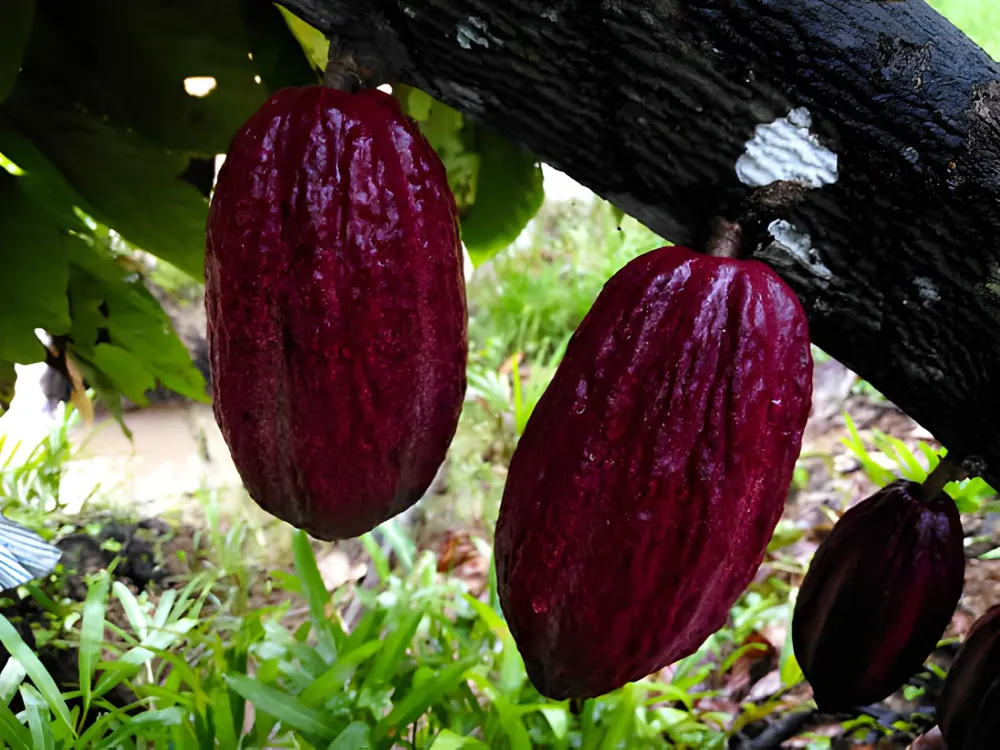
The cocoa tree produces its pods directly on the trunk and main branches (cauliflory). A pod takes approximately 5 to 6 months to develop after pollination. Harvesting takes place when the pod changes colour — from bright green or deep red to an orange-yellow for Trinitario varieties — signalling optimal maturity.
Harvesting is entirely manual: pods are detached with a machete or secateurs, with care taken not to damage the floral cushion that will produce future pods. Selective harvesting, carried out pod by pod at optimal maturity, is the first condition for premium quality. Immature or overripe pods are discarded.
2.2 Pod Breaking and Bean Extraction
Pods are opened within hours of harvest, ideally within 24 hours. The time between harvesting and pod breaking is critical: a pod kept closed for too long risks developing unwanted fermentations. The beans, coated in their sweet white pulp (mucilage), are extracted and gathered into piles or placed in fermentation boxes.
2.3 Fermentation: The Foundational Step for Aromatic Profile
Fermentation is arguably the most decisive step in producing a great cocoa. It lasts 5 to 7 days for Criollo-Trinitario varieties, in slatted wooden boxes that allow progressive aeration. During the first days, natural yeasts present in the mucilage convert the sugars of the pulp into alcohol (alcoholic fermentation), then acetic bacteria transform the alcohol into acetic acid, which penetrates the beans and triggers complex enzymatic reactions inside.
It is during this fermentation that aroma precursors are formed — the amino acids and reducing sugars that, during roasting by the chocolatier, will give rise to hundreds of aromatic molecules characteristic of fine chocolate. A poorly controlled fermentation process — too short, too long, too hot — will produce an aromatically poor cocoa, with acidic or bitter defects.
EKL Export works with cooperatives whose teams have mastered the timing and parameters of fermentation perfectly, and maintains regular monitoring protocols (cut test, pH measurement, temperature monitoring).
2.4 Sun Drying
After fermentation, the beans are washed to remove mucilage residues, then spread in a thin layer on raised racks or tarpaulins in the sun. Drying lasts an average of 7 to 10 days, depending on weather conditions. The beans are turned regularly to ensure homogeneous drying.
The objective is to reduce the moisture content of the beans from 55–60% (after fermentation) to 7–8%, the threshold necessary for good preservation during maritime transport. Too rapid a drying process — for example in flame-fired mechanical dryers — is strongly inadvisable: it introduces smoky or acidic notes that mask the noble aromas of the bean. Only progressive sun drying preserves the aromatic integrity of quality beans.
2.5 Sorting, Grading and Quality Control
Once dried, the beans undergo a rigorous sorting process. Flat beans (without an almond), mouldy, germinated, insect-damaged or fermentation-defective beans (slaty beans, excessive purple beans) are eliminated. Grading standardises lot sizes.
Cut tests are performed on each lot: 100 beans are cut transversally and the percentage of well-fermented beans (brown almond with visible fermentation channels), insufficiently fermented beans (purple or slaty almond) and defective beans is assessed. ICCO standards for Fine Flavour cocoa require a minimum of 75% well-fermented beans.
3. Aromatic Profile and Professional Applications
3.1 A Complex and Distinctive Aromatic Profile
Sambirano cocoa from Madagascar presents an aromatic profile that differs fundamentally from West African cocoas (Ghana, Ivory Coast) that dominate the mass market. Where the latter offer predominantly chocolatey, slightly astringent and relatively homogeneous aromas from year to year, Sambirano cocoa surprises with its complexity and terroir variability.
Professional tasters and chocolatiers who regularly work with this cocoa describe an aromatic profile articulated around several note families:
- Primary fruity notes: raspberry, cherry, redcurrant, sometimes tropical fruits (passion fruit, mango).
- Floral notes: jasmine, rose, sometimes violet — particularly present in lots from well-fermented beans with a dominant Criollo variety.
- Citrus notes: orange zest, bergamot, lemon — bringing freshness and vibrancy on the palate.
- Tertiary depth notes: brown tobacco, sandalwood, fine leather, mild spices — characteristic of lots that have undergone long, well-managed fermentation.
- Finish: long, persistent, with a slightly tannic but never astringent finale.
This aromatic palette is what makes Sambirano cocoa so precious for bean-to-bar chocolatiers: each origin is unique, each vintage tells a different story.
3.2 Professional Applications
Sambirano cocoa from Madagascar is particularly well suited to several high-end professional applications:
- Single-origin Madagascar bean-to-bar chocolate: the flagship product for artisan chocolatiers who want to highlight a unique and traceable origin. A 70% dark chocolate made from Sambirano cocoa reveals the full aromatic complexity of the beans.
- High pastry ganaches and pralines: the fruity and floral complexity of Sambirano cocoa creates ganaches of exceptional finesse, particularly well suited to pairings with red fruits, citrus or mild spices.
- Premium couverture: for pastry chefs seeking a chocolate couverture with a differentiating aromatic profile compared to major industrial brands.
- Speciality chocolate beverages: cocoa powder or cocoa mass for cafés and gastronomic restaurants offering speciality hot chocolates crafted like espressos.
- Cosmetics and nutraceuticals: cocoa butter from Sambirano beans is sought after for its quality and polyphenol content.
4. Sustainability and Ethics: The Certifications That Make the Difference
4.1 A Supply Chain Built on Ethics
Madagascar is one of the poorest countries in the world. The cocoa sector employs tens of thousands of small producers, often organised into cooperatives. In this context, the choice of ethical certifications is not a marketing argument: it is a fundamental responsibility for any buyer who cares about production conditions at source.
EKL Export has chosen a fully transparent and certified supply chain, working exclusively with cooperatives whose practices are audited annually by independent bodies.
4.2 Organic Agriculture Certification (Ecocert)
The cocoa we export from the Sambirano Valley comes from plots certified Organic Agriculture by Ecocert, one of the world’s most recognised certification bodies. This certification guarantees:
- The absence of synthetic chemical pesticides, herbicides and chemical fertilisers.
- The maintenance of biodiversity on and around cultivated plots.
- Respect for agroecological practices that enrich soils over the long term.
- An annual audit of the entire production chain, from the plot to export packaging.
For chocolatiers and brands wishing to display the EU Organic logo on their products, our cocoa meets all the traceability requirements of European regulations.
4.3 SPP Certification (Symbol of Small Producers)
The SPP is the most demanding fair trade certification for small producers organised into cooperatives. Unlike the standard Fairtrade label, which also covers large companies, the SPP is exclusively reserved for peasant organisations. It guarantees:
- A development premium paid directly to cooperatives, used for community projects (schools, water access, training).
- A guaranteed minimum price that protects producers from fluctuations in world cocoa prices.
- Lasting and transparent commercial relationships between buyers and producers.
- Respect for social and environmental rights throughout the supply chain.
Buying SPP-certified cocoa from EKL Export means contributing directly to improving the living conditions of producer families in the Sambirano Valley.
4.4 HACCP and Food Safety
All cocoa lots exported by EKL Export are handled according to HACCP principles (Hazard Analysis and Critical Control Points), the international food safety standard. This covers the entire chain: from harvest to packaging and shipment, each stage is subject to documented monitoring of critical control points likely to introduce biological, chemical or physical contamination.
Analyses for pesticide residues, heavy metals (lead, cadmium) and mycotoxin contamination (ochratoxin A) are carried out on each lot prior to shipment, in compliance with the requirements of European Regulation EC 1881/2006 on food contaminants.
5. International Logistics: From Madagascar to Your Workshop
5.1 Available Packaging
EKL Export offers Sambirano cocoa in various formats adapted to professionals’ needs:
- Jute bags of 25 kg or 60 kg: the standard packaging for importers, distributors and large chocolate manufacturers. Bags are lined with a food-grade polyethylene film to protect the beans from moisture during maritime transport.
- Vacuum-sealed bags of 1 to 5 kg: for artisan chocolatiers, small bean-to-bar manufacturers and professional buyers wishing to test a new origin.
- Cocoa mass (cocoa liquor): available in blocks of 1 to 5 kg, produced from the first processing stage of roasted beans.
- Defatted cocoa powder: packaged in bags of 1 to 25 kg, certified organic, with reduced cocoa butter content (10–12% or 20–22% depending on request).
- Raw or deodorised cocoa butter: in blocks or pastilles, vacuum-packed in cartons of 5 to 25 kg.
5.2 Shipping Methods
EKL Export controls the entire international logistics chain from Antananarivo and the port of Tamatave (Toamasina):
- Sea freight from the port of Tamatave to European ports (Marseille, Le Havre, Antwerp, Rotterdam): transit time of 18 to 25 days depending on destination. Ideal for large volumes (FCL or LCL).
- Air freight from Ivato Airport (Antananarivo): transit time of 3 to 5 days. Recommended for urgent orders or small volumes.
- DHL Express: for samples and orders under 30 kg, with delivery in 3 to 5 business days.
Each shipment is accompanied by all the regulatory documents required for import into Europe: certificate of origin, phytosanitary certificate, laboratory analysis certificate, Ecocert organic certificate, and customs documents compliant with the Economic Partnership Agreements between Madagascar and the European Union.
5.3 The Madagascar–EU Customs Advantages
Madagascar benefits from a preferential trade agreement with the European Union under the EBA (Everything But Arms) scheme, which grants Least Developed Countries (LDCs) duty-free, quota-free access to the European market for virtually all their agricultural exports.
In practical terms, this means that raw cocoa, cocoa mass, cocoa powder and cocoa butter imported from Madagascar benefit from zero customs duties upon entry into the European Union. This significant tariff advantage makes sourcing Malagasy cocoa particularly competitive for European buyers compared to other origins subject to standard customs duties.
6. Why Choose EKL Export as Your Sambirano Cocoa Supplier
EKL Export is a Franco-Malagasy company headquartered in Antananarivo. Our unique positioning — rooted in Madagascar while connected to European markets — allows us to offer our clients the best of both worlds: genuine proximity to producers and mastery of European regulatory and quality requirements.
Our added value rests on several pillars:
- Direct access to the source: we work without unnecessary intermediaries with selected cooperatives in the Sambirano Valley, guaranteeing quality, traceability and a fair price at origin.
- Dual expertise: between Madagascar and France, our team masters both local production realities and European import standards (regulations, certifications, logistics).
- Flexibility: we adapt to each client’s specific needs in terms of volume, packaging, required certifications and delivery timelines.
- Full transparency: every lot is documented from plot to delivery, and we make all laboratory analyses and associated certificates available to our clients.
- A lasting partnership: our goal is not a single transaction but a long-term relationship. We support our clients in developing their Malagasy sourcing and can organise field visits for buyers who wish to meet our producer partners.