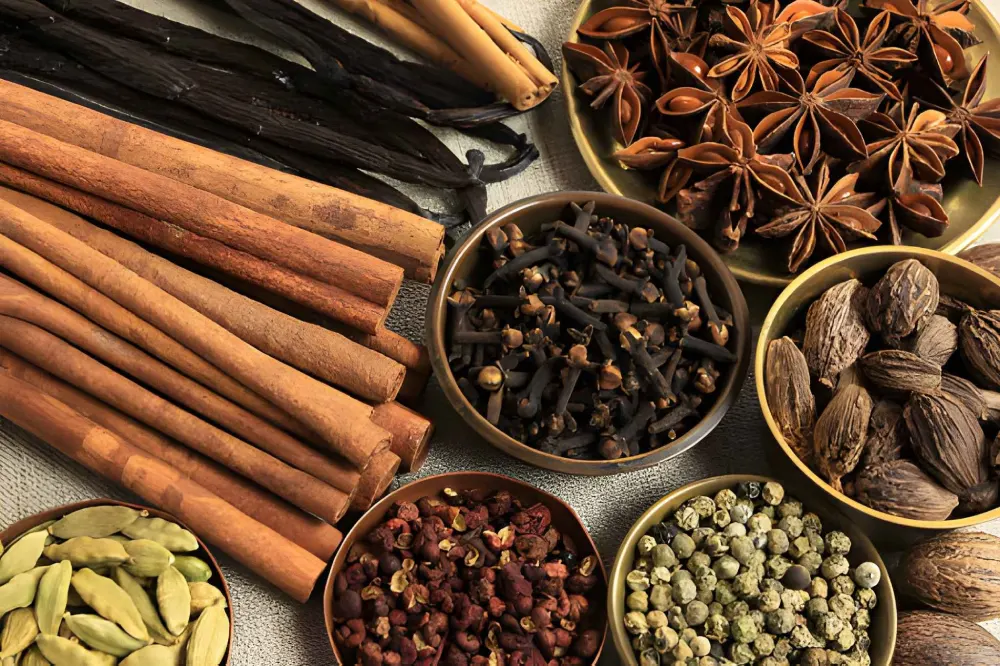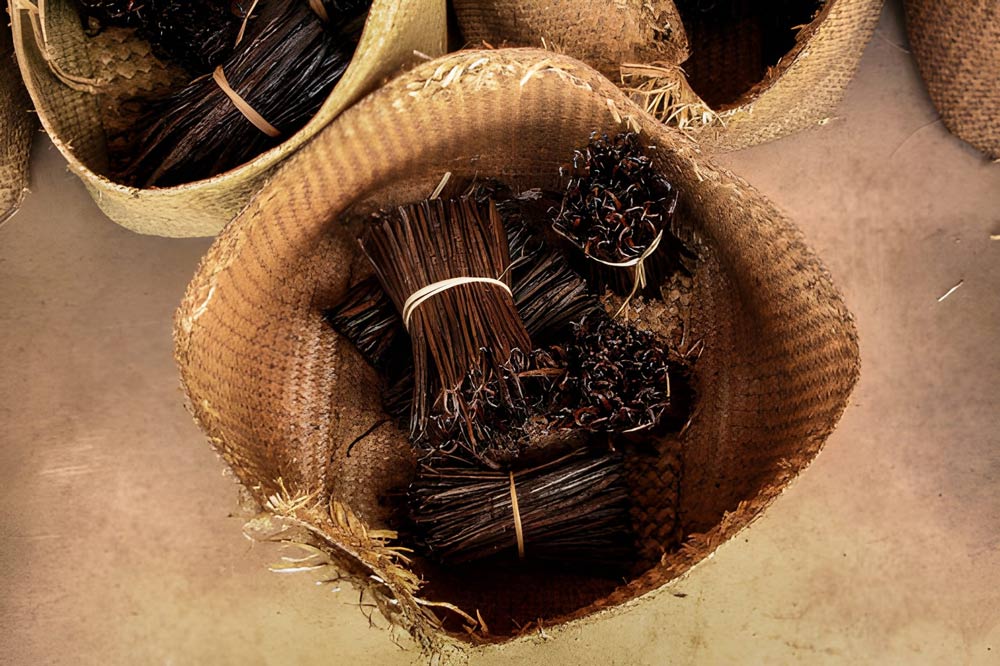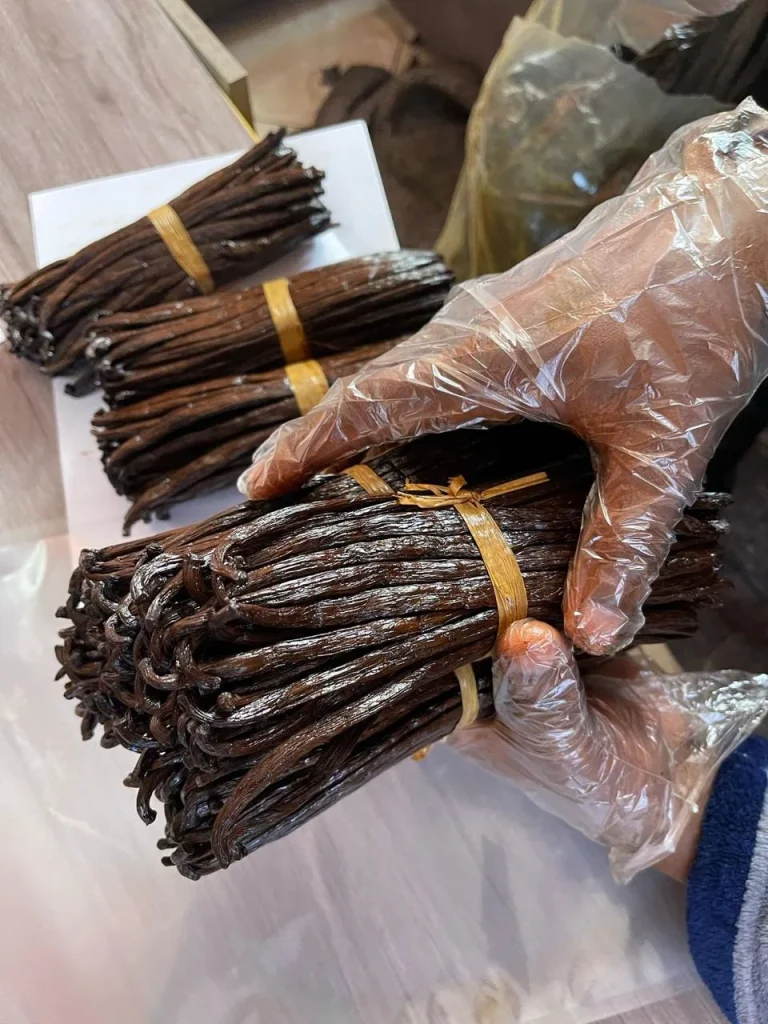
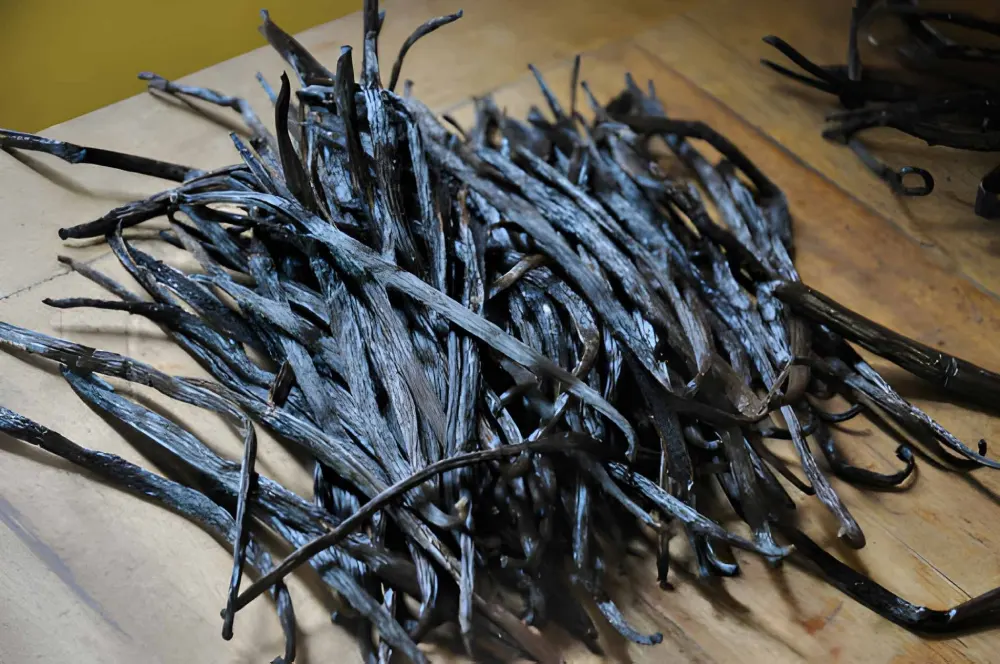
Bourbon vanilla from Madagascar is recognised as the world’s finest vanilla. Every year, it accounts for over 80% of global natural vanilla exports. Yet behind this figure lies a complex reality: not all Madagascar vanilla is equal. Between export-grade beans and standardised lots, the difference is considerable — aromatically, in terms of traceability, and in terms of human and environmental impact.
This comprehensive guide is aimed at food industry professionals, chocolatiers, pastry chefs, roasters, perfumers and importers who wish to deeply understand this exceptional product, identify the criteria for premium vanilla, and learn how to source with full confidence directly from the origin.
1. Madagascar, the World’s Leading Vanilla Producer: Understanding the Context
1.1 A Natural Monopoly Built Over Centuries
Madagascar did not become the world’s leading vanilla producer by chance. It all began in the 19th century, when the Vanilla planifolia plant — native to Mexico — was introduced to the island of Réunion, then known as île Bourbon. The manual pollination technique, developed by Edmond Albius in 1841, made it possible to cultivate vanilla outside its natural Mexican habitat, where Melipona bees naturally ensured fertilisation.
From Réunion, cultivation spread to Madagascar, where the north-eastern part of the island offered ideal climatic conditions. By the end of the 19th century, the SAVA region had established itself as the heart of world production — a position it has never relinquished. It is from this history that Malagasy vanilla takes its name: Bourbon Vanilla, in tribute to the island of Réunion from which it originates.
1.2 The SAVA Region: A Unique Ecosystem
The SAVA region — an acronym for Sambava, Antalaha, Vohémar and Andapa — is a coastal territory in north-eastern Madagascar bathed by the Indian Ocean. It alone concentrates virtually all of Madagascar’s vanilla production, representing approximately 80% of the global market.
What makes this territory exceptional is the combination of several natural factors that are difficult to replicate elsewhere:
- A hot, humid tropical climate with abundant rainfall (between 2,000 and 3,500 mm per year) spread across a long rainy season, essential for the growth of the vine.
- Deep, rich volcanic soils with high organic matter content, which nourish the plant with the trace elements essential for aroma development.
- Exceptional forest biodiversity that enables agroforestry cultivation, a virtuous model in which vanilla grows in the shade of native support trees.
- Moderate temperature ranges between day and night that slow the ripening of the beans and encourage maximum concentration of natural vanillin.
It is this combination of conditions that gives Bourbon vanilla from Madagascar its inimitable aromatic profile: deep, creamy and woody notes, a long olfactory persistence, and a natural vanillin content among the highest in the world — generally between 1.5% and 2.5% depending on the lot and the season.
1.3 A Global Market Under Pressure
The natural vanilla market is one of the most volatile agricultural markets in the world. Prices have experienced spectacular fluctuations over the past two decades: from under $20 per kilogram in the early 2000s, the price of vanilla reached over $600 per kilogram in 2018 following Cyclone Enawo, which devastated the SAVA region in 2017. Since then, the market has gradually stabilised, but remains sensitive to climatic hazards, harvest cycles and speculation.
For a professional buyer, this reality underscores the importance of establishing direct and lasting relationships with reliable exporters, rather than depending on international spot market prices. This is precisely the model EKL Export offers: a secure, traceable supply negotiated directly with producers in the SAVA region.
2. From Flower to Bean: The Vanilla Cycle Explained
2.1 Agroforestry Cultivation
The vanilla vine (Vanilla planifolia) is a climbing orchid that cannot survive without support. In the SAVA region, it is traditionally cultivated wrapped around support trees — often banana trees, breadfruit trees or local forest species — in a partially shaded understorey. This agroforestry system is essential on several levels:
- It maintains soil moisture and regulates the temperature around the plant.
- It preserves local biodiversity by avoiding intensive monocultures.
- It protects the vines from violent winds and tropical cyclones.
- It encourages slow, progressive ripening of the beans, essential for the development of aromatic precursors.
A vanilla vine begins producing its first flowers between 2 and 3 years after planting. Its productive lifespan is approximately 10 to 12 years, after which it is gradually replaced.
2.2 Manual Pollination: Craftsman’s Work
This is undoubtedly the most emblematic step in vanilla cultivation in Madagascar. Unlike Mexico, where Melipona bees ensure natural pollination, Madagascar does not have these specific pollinating insects. Each flower must therefore be pollinated by hand, one by one, on the very morning it opens — because the vanilla flower remains open for only a few hours.
Farmers walk through their plantations at dawn, a fine bamboo stick or pin in hand, to delicately transfer pollen from the stamen to the pistil of each flower. This meticulous work requires both precision, speed and perfect knowledge of the maturity stage of each flower. An experienced farmer can pollinate between 1,000 and 1,500 flowers per day.
This care given to each flower from its very first hours is one of the fundamental reasons why Bourbon vanilla from Madagascar is so precious: it is a product entirely shaped by human hands, from the very first day to the last.
2.3 Nine Months of Patience
After pollination, the bean takes approximately 9 months to develop on the vine. During this period, it goes from bright green to a pale yellow at the tip, signalling that it is beginning to ripen. Harvesting takes place precisely at this stage of pre-maturity: if the bean is picked too early, it will lack aroma; too late, it risks splitting and losing its precious seeds.
The main harvest season in the SAVA region runs from May to July, with some variations depending on local microclimates. This is the moment when the entire supply chain springs into action: cooperatives mobilise their members, processing centres activate, and exporters begin their collection and quality control operations.
3. The Transformation Process: The Four Stages That Make the Difference
Fresh off the vine, a green vanilla bean is odourless. It exudes none of the aromas that make it so precious. It is the entire post-harvest transformation process that will reveal, and then fix, this unique aromatic profile. This process, inherited from traditional Malagasy know-how, comprises four fundamental stages.
3.1 Scalding
In the hours following harvest, the beans are immersed in hot water at approximately 65°C for 2 to 3 minutes. This step halts the biological maturation of the bean and triggers the enzymatic reactions that will transform glucovanillins into vanillin — the molecule responsible for vanilla’s characteristic aroma. Scalding is a critical step: a temperature that is too low will not initiate the desired reactions, while a temperature that is too high will destroy the enzymes and denature the aromas.
3.2 Sweating
Immediately after scalding, the still-warm beans are wrapped in wool blankets and placed in airtight crates for 24 to 48 hours. In this gentle, enclosed heat, they perspire, ferment slightly and begin to take on their characteristic brown colour. It is during sweating that the majority of vanilla’s aromas are fixed: the still-active enzymes continue their aromatic conversion work in the darkness and warmth.
3.3 Sun Drying
The beans are then exposed to the sun each morning for 3 to 4 hours, on traditional mats or drying racks. This progressive sun-drying process can last 6 to 8 weeks. Each evening, the beans are brought inside to avoid overnight moisture. This daily cycle of exposure and sheltering is essential: it allows for homogeneous and progressive dehydration that preserves the suppleness and texture of the beans while concentrating the aromas.
Too rapid a drying process — for example in a mechanical drying oven — produces beans that are dry, but brittle, lacking flexibility and with less complex aromas. Traditional sun drying is irreplaceable for premium vanilla.
3.4 Ageing and Conditioning
The final stage is often the least well known, but one of the most important. The dried beans are grouped into bundles and placed in wooden trunks lined with greaseproof paper, where they rest for 2 to 6 months under controlled temperature and humidity conditions. During this ageing period, the aromas continue to evolve and grow in complexity, much like a fine wine maturing in barrels.
It is at the end of this ageing process that the beans are sorted, graded and conditioned according to export standards: by grade (A, B or C according to length and moisture content), by lot (traceable to the producer), and according to buyer specifications (weight, packaging, required certifications).
4. Quality Criteria: How to Evaluate a Premium Vanilla Bean
For a professional buyer, knowing how to evaluate vanilla quality is a fundamental skill. Here are the objective criteria to master.
4.1 Length
The first visible criterion is the length of the bean. Three grades are generally distinguished:
- Grade A (Gourmet): beans of 14 cm and over, plump, supple, with a moisture content between 25% and 38%. This grade is intended for the most demanding professionals: chocolatiers, pastry chefs and Michelin-starred chefs.
- Grade B (Extraction): beans of 10 to 14 cm, less plump, with a lower moisture content. Ideal for the production of vanilla extract or powder.
- Grade C (TK — Tout Komori): short, fragmented or slightly defective beans, used primarily for industrial extraction.
4.2 Moisture Content
A moisture content between 25% and 38% is the sign of a well-prepared vanilla bean, both supple (not brittle) and dry enough for good preservation. Below 20%, the bean is too dry and brittle; above 40%, it is too moist and risks developing mould.
4.3 Vanillin Content
This is the benchmark chemical criterion. Natural vanillin (C₈H₈O₃) is the main molecule of the vanilla aroma. A premium quality bean presents a vanillin content of between 1.5% and 2.5% of its dry weight. This content is measured in the laboratory by chromatography.
4.4 Visual and Olfactory Appearance
A good bean is supple, slightly oily to the touch, of a deep and homogeneous chocolatey brown. Its surface may be lightly frosted by crystals of natural vanillin — this frosting (known as givre or frost) is a very positive sign of quality. Upon opening, the aroma should be immediate, powerful and rounded, with warm and creamy notes. Any acidic, alcoholic or excessively fermented smell is a warning signal.
5. Traceability and Certifications: The Guarantees of Responsible Sourcing
5.1 Traceability from Farm to Export
At EKL Export, every batch of vanilla is fully traceable from the producer or cooperative of origin through to final shipment. This traceability covers the identification of the production zone (municipality, cooperative), the harvest and processing dates, the results of laboratory analyses carried out by the CTHT (Centre Technique Horticole de Tamatave), accredited to ISO 17025, and the phytosanitary certificates required for export.
This rigorous traceability is a direct response to the requirements of the European market, which since 2020 has been imposing increasingly strict rules regarding due diligence on agricultural supply chains.
5.2 Available Certifications
EKL Export can supply vanilla certified under several international standards:
- Ecocert / Organic Agriculture: production without synthetic chemical inputs, audited annually.
- SPP (Symbol of Small Producers): fair trade certification for small producers organised into cooperatives.
- HACCP: Hazard Analysis and Critical Control Points system, guaranteeing food safety throughout the supply chain.
These certifications are a powerful commercial argument for brands wishing to highlight their sourcing to their own end customers.
6. How to Source Madagascar Vanilla with EKL Export
EKL Export is a Franco-Malagasy company headquartered in Antananarivo, with direct partnerships in the SAVA region. Our model is based on short supply chains: we work directly with certified cooperatives and producers, without unnecessary intermediaries, which guarantees fair pricing at source and quality controlled at every stage.
We offer packaging adapted to all professional buyer profiles: tubes of 10 to 50 beans for artisans, vacuum-sealed pouches of 0.5 to 5 kg for laboratories and food manufacturers, and bulk bags of 10 to 50 kg for importers and distributors. Each order can be customised in terms of grade, certifications, packaging and shipping method (DHL Express, air freight or sea freight).