Cocoa is a raw material used in several forms across the food industry. A chocolate maker who roasts their own beans does not have the same needs as a biscuit manufacturer or a company producing chocolate drinks.
The form of cocoa affects the manufacturing process, the characteristics of the end product and storage conditions. At EKL Export, we review requests for cocoa ingredients from Madagascar according to the intended application.
Which form of cocoa for which use?
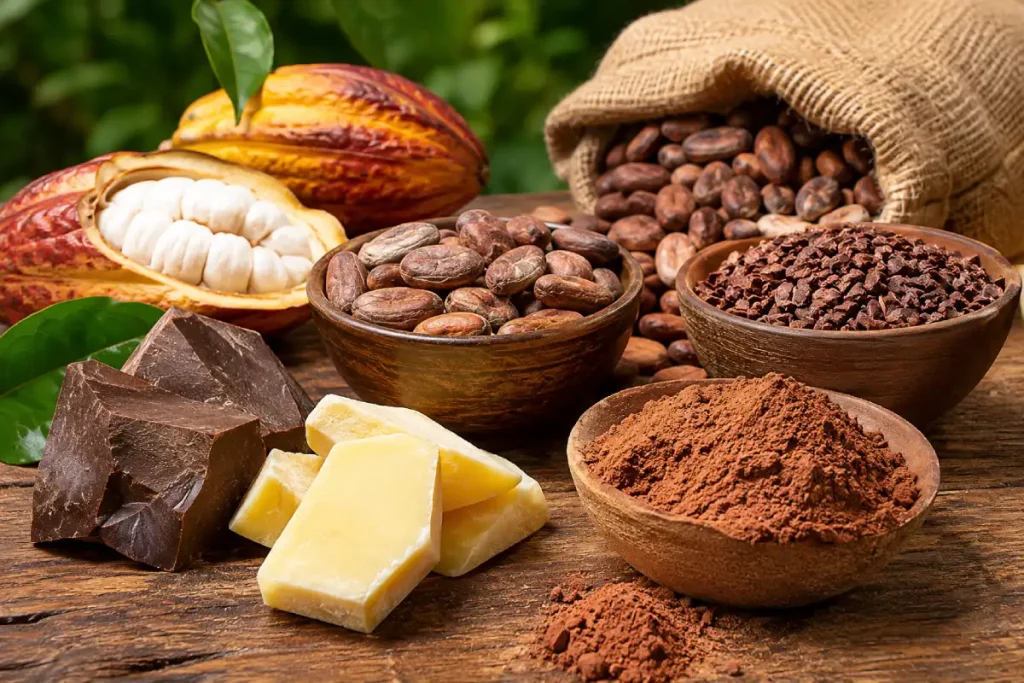
| Form | How it is obtained | Typical uses |
|---|---|---|
| Beans | Fermented and dried beans | Roasting, grinding and chocolate making by the customer |
| Nibs | Pieces of shelled beans | Chocolate bars, biscuits, cereals, gourmet preparations |
| Mass (liquor, paste) | Grinding the nibs | The base for chocolate making |
| Butter | Separating the fat from the mass | Texture and fluidity of chocolate |
| Powder | Cocoa cake, after part of the butter is extracted | Drinks, biscuits, creams, food preparations |
Beans, to control the first steps
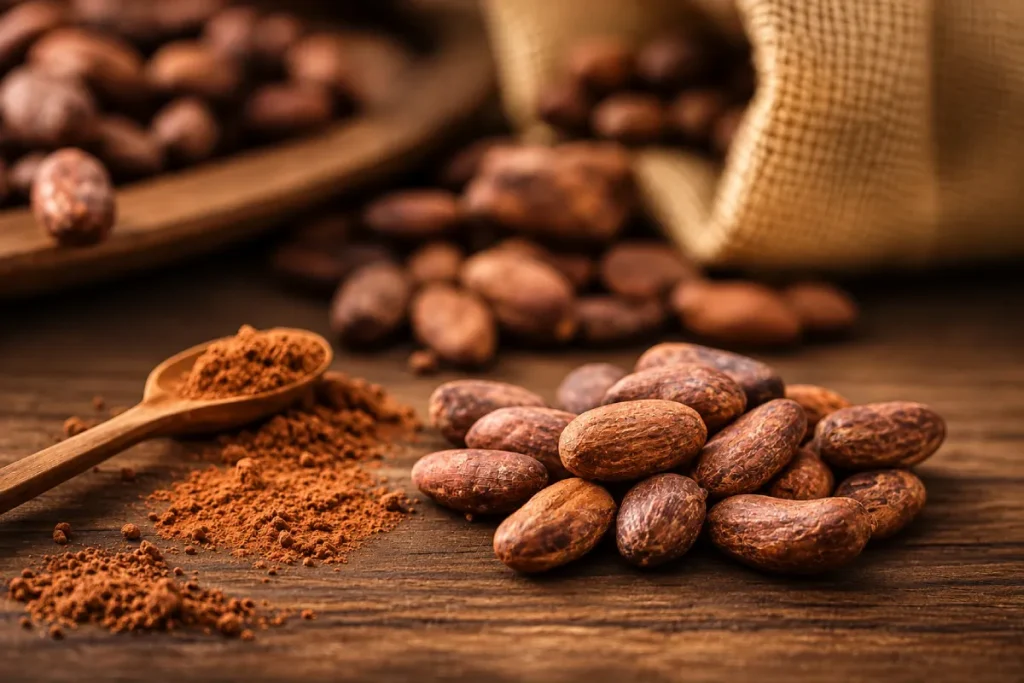
Cocoa beans appeal to professionals who want to handle roasting, grinding and chocolate making themselves. Their origin, fermentation and moisture are particularly important. For chocolate makers working on distinctive flavour profiles, the choice of beans plays a key role.
Our page dedicated to Sambirano cocoa presents this origin and its characteristics.
Nibs, for taste and texture
Nibs are pieces of shelled cocoa beans. They are popular in chocolate bars, biscuits, cereals and various gourmet preparations. Their crunchy texture and aromatic character add an extra dimension to recipes. However, particle size and any degree of roasting must match the manufacturer’s requirements.
Cocoa mass, a foundation for chocolate making
Cocoa mass, also called cocoa liquor or paste, is obtained by grinding the nibs. It is a central raw material in chocolate manufacturing. The ICCO describes the main stages of cocoa processing, from beans to the various ingredients used by industry.
Cocoa butter and cocoa powder
Cocoa butter is obtained by separating the fat from the mass. It mainly contributes to the texture and fluidity of chocolate. Powder is made from cocoa cake, after part of the butter has been extracted. It is used in drinks, biscuits, creams and other food preparations.
The ICCO’s technical FAQ offers a deeper understanding of these processes.
Choosing according to your specifications
The required quality depends on the recipe, the equipment and the manufacturing requirements. The CAOBISCO/ECA guide notably highlights the importance of quality characteristics right from the selection of the raw material. At EKL Export, we review supply options according to our partners’ capacities and our customers’ needs.
✅ What to tell us
- The form you need: beans, nibs, mass, butter or powder;
- The application: chocolate, biscuits, drinks, preparations…;
- Your specifications: particle size, roasting, quality criteria;
- Your forecast volumes and destination country.
Discover our range of export products and our approach to quality and international trade.
📚 Sources and references
Further reading
Looking for a cocoa ingredient for your business?
Send your specifications, forecast volumes and destination to contact@ekl-export.mg.