
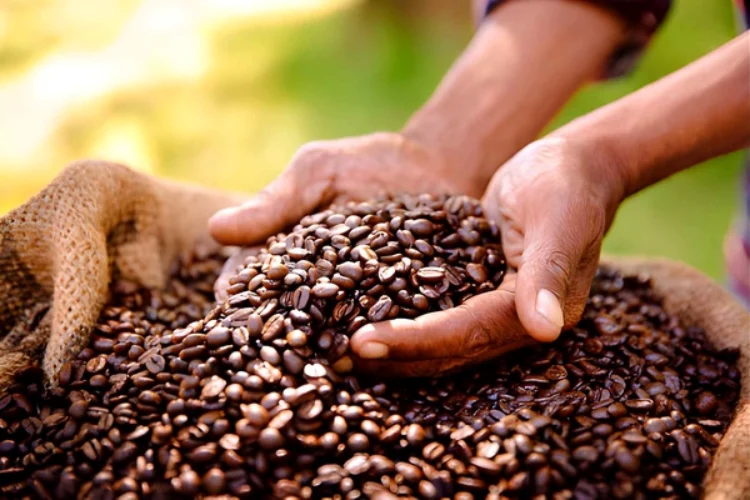
Less famous than its vanilla or cocoa, Madagascar coffee nonetheless has a long history and real potential for roasters. The island mainly grows Robusta in the hot lowlands of the east and north, and Arabica in the highlands. Two species, two terroirs, two uses: here is what to know before buying Malagasy green coffee.
Robusta or Arabica: two coffees, two terroirs
| Robusta | Arabica | |
|---|---|---|
| Species | Coffea canephora | Coffea arabica |
| Areas | Lowlands of the east coast and the north | Highlands, notably Itasy (Ampefy) |
| In the cup | Strong, marked bitterness, full body | Softer, aromatic, balanced acidity |
| Caffeine | High | More moderate |
| Uses | Espresso blends, crema, soluble coffee | Specialty coffee, blends with a distinctive identity |
| Volumes | Most of Madagascar’s output | Smaller, and therefore more sought after |
Lowland Robusta
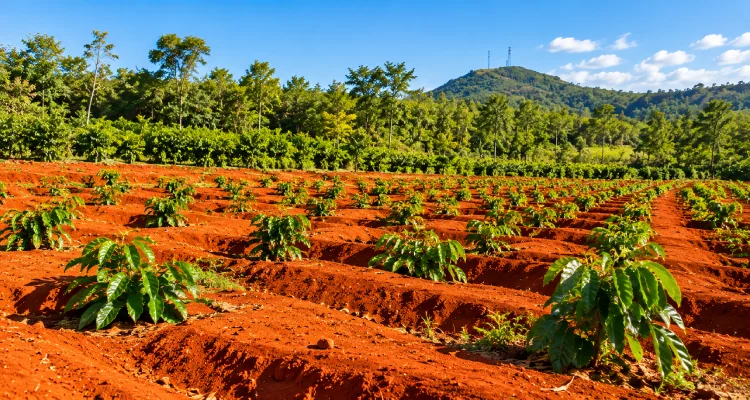
Robusta makes up most of the island’s production. It grows at low altitude in a hot, humid climate, mainly on the east coast and in the north. It produces a strong, high-caffeine coffee with a full body: a mainstay of espresso blends, where it adds crema and structure.
Highland Arabica
Arabica is grown at altitude, notably in the Itasy region around Ampefy. Volcanic soils and cool nights encourage the cherries to ripen slowly, resulting in a softer, more aromatic cup. Its smaller volumes make it a prime origin for specialty coffee.
🌿 Did you know?
Madagascar is home to many endemic wild coffee species, many of them naturally low in caffeine. They fascinate researchers but are not traded on a large scale.
From coffee tree to green coffee: 6 key steps
Green coffee is the seed of the coffee tree, stripped of its pulp and husks, before roasting. Its quality is built at every stage:
- Picking: only fully ripe cherries produce coffee free from under- or over-ripe defects;
- Processing: the dry (natural) process, drying whole cherries, predominates in Madagascar, especially for Robusta; the more demanding wet process is used for some Arabica;
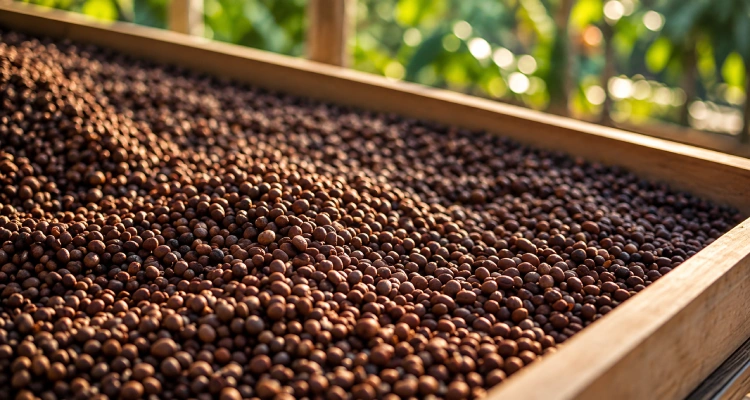
- Drying: it brings the bean to a stable moisture level, without unwanted fermentation or mould;
- Hulling: it frees the green bean from its dry husks;
- Sorting and grading: beans are sized and cleared of defects (black, broken or insect-damaged beans, foreign matter);
- Packing: in jute bags, ideally lined with a barrier bag for higher-grade lots.
Parameters to put in the contract
Green coffee is bought against a specification and a sample. The usual criteria:
- Moisture content: too moist and the bean deteriorates; too dry and it loses its aroma;
- Bean size, expressed as a screen size;
- Defect count on a reference sample, using the agreed grading method;
- Cup profile, assessed by cupping a roasted sample;
- Crop year: coffee from the latest harvest holds its qualities better than old stock.
Green coffee does not forgive shortcuts: a drying fault at origin always ends up in the consumer’s cup.
Shipping and storage: condensation is the enemy
Green coffee travels by sea container. Temperature swings between the Indian Ocean and Europe can make the container “sweat” and dampen the top bags. Barrier liners, kraft paper under the container roof, moisture absorbers and loading only well-dried beans all reduce that risk.
📦 On arrival
Store coffee on pallets, away from walls, heat, light and odours. Stored properly, it keeps its qualities for several months.
EU regulation: plan ahead for traceability
Coffee is one of the commodities covered by the EU Deforestation Regulation (EUDR). Under the application timetable in force, operators placing it on the EU market must be able to show that it does not come from land deforested after the cut-off date, notably through plot geolocation. An exporter who knows its growers and documents the origin of each lot becomes a valuable partner.
Frequently asked questions
Is Madagascar coffee suitable for espresso?
Yes. Malagasy Robusta brings body, crema and intensity to espresso blends, while highland Arabica adds sweetness and aromatic complexity.
Can I get a sample before ordering?
It is essential: a green coffee sample lets the roaster run their own roasting and cupping tests before approving the lot.
When is the harvest season?
It depends on the species and the region. Check our seasonality calendar or contact us for current availability.
Further reading
Ready to taste Madagascar coffee?
EKL Export supplies Robusta and Arabica green coffee, selected from partner growers and checked lot by lot. Request a sample for your roasting trials.